D-pad moves · A confirms · B cancels · Select opens modes
Pocket puzzle · 1995 / 2026
Move the candy-bright balls. Make a line of five. Keep the garden clear.
1 Pick a ball2 Pick a free tile3 Line up five
What if?A pocket edition that never was
Game Boy Color packaging concept visualization
From the floppy archive
A small Polish classic
Kulki belongs to a remarkably durable family of puzzle games: simple to learn, difficult to master, and recreated around the world.
1995
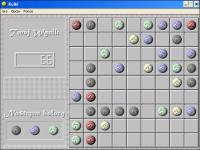
Kulki for Windows
Lewandowski’s compact Windows release
Jarosław Lewandowski released Kulki as Polish freeware for Windows 3.1 and later. Its 9×9 board asks players to move colored balls through open paths and form horizontal, vertical, or diagonal lines of five or more.
A successful line disappears. Otherwise, three new balls arrive. The game ends when the board is full.
1992
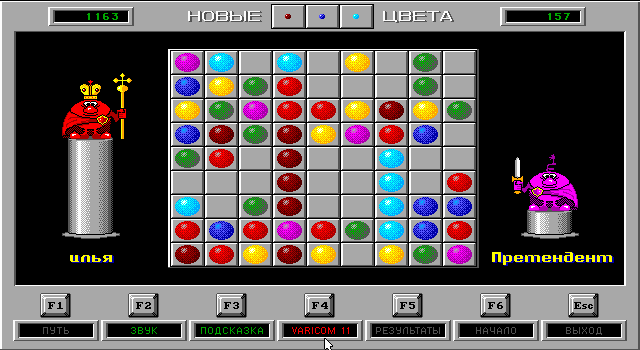
The Russian original
Gamos Color Lines for DOS
Kulki is a Polish descendant of Color Lines, created three years earlier by Oleg Demin and published by Gamos. Artists Gennady Denisov and Igor Ivkin gave the DOS original its distinctive look.
The 9×9 board, clear-path movement, lines of five, and three-ball penalty are the same core rules.
∞
A worldwide family
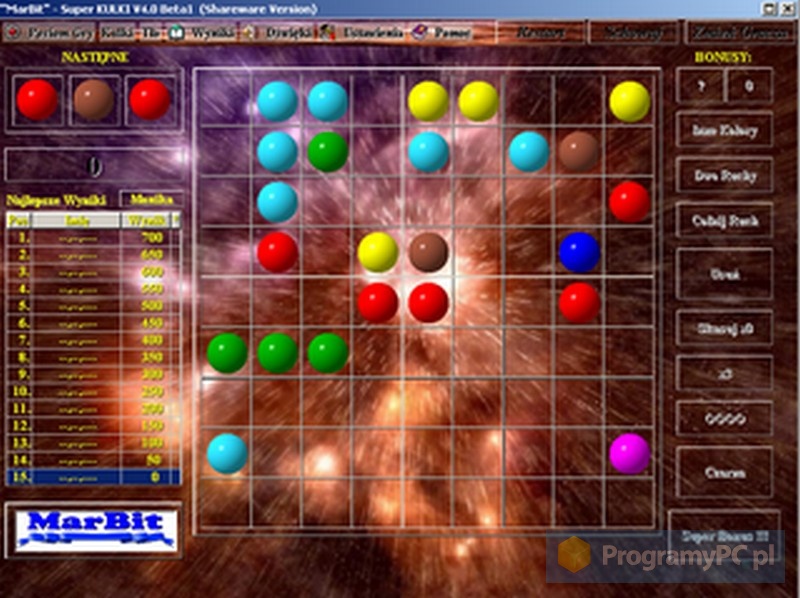
MarBit’s elaborate Super Kulki
The mechanic became a kind of digital folk game. Super Kulki, Lines 97, online Kulki, and countless games named Balls, Lines, Шарики, or Kugeln all grew from the same idea.
Lewandowski’s compact 606 KB version spread through BBS archives, magazine cover discs, and early Polish download sites. Little reliable biographical information about its solo author survives online.